Pinterest for a Seasonal SaaS: Why My Christmas Elf App Starts Marketing in October
— 6 min read
Most of my products have a traffic problem. Wichtelzeit has a calendar problem on top of that.
Wichtelzeit writes personal letters, short stories, pranks and small tasks from the Christmas elf for German kids. If you didn't grow up with it: in a lot of German families a tiny elf (the "Wichtel") moves in behind a little door on the wall in December, leaves notes, makes a mess and occasionally steals a sock. Parents love it for about three days. Then it's 11 p.m. and they still need tomorrow's letter. That's the gap the app fills.
The catch: that need exists for roughly five weeks a year. The season starts in late November, peaks in December and is over on Christmas Eve. Everything I build for distribution has to work inside that window, or it's useless until next year.
Why SEO alone doesn't fit a five-week product
My default channel for Sharry and this site is SEO. It's slow, but it compounds. For a seasonal product, "slow" is a real problem:
- A page published in October is often not even indexed until November.
- Ranking on page one for anything competitive takes months, not weeks.
- By the time Google trusts the page, the kids are opening presents.
So this year I did both. Wichtelzeit now has a guide section (Ratgeber) with nine articles: elf ideas for every day of Advent, letter templates, names, pranks, how to build an elf door, excuses for when the elf forgot to move, and when the elf actually moves in. That's the SEO bet, and realistically it pays off in 2027.
For this season, I needed a channel where parents are already planning before December.
Why Pinterest (and why only for this product)
Pinterest is where German parents plan Advent crafts. Searches like "Wichteltür basteln" (build an elf door) or "Wichtel Ideen" start weeks before the first door appears on the wall. That's the opposite of Google's timing problem: people save ideas in October and November and come back to them in December.
Two more things made it fit:
- Pins are evergreen. A pin keeps getting shown long after it's posted, a lot more like a search result than a tweet. Every pin links to one of the guide articles, so it feeds the same pages I'm building for SEO. No separate content track.
- It doesn't compete with my main focus. My channels for Sharry and Herrlich Digital are SEO and email, and that stays. Nobody searches Pinterest for a screen sharing tool. For a craft-and-family product, though, it's the obvious place to test.
The setup
Here's what's live as of today:
- A Pinterest business profile for Wichtelzeit, with the domain
wichtelze.itverified via a DNS TXT record. - Five boards: elf ideas for kids, Advent with kids, building an elf door, elf letter templates and elf pranks.
- 16 pins, scheduled one per day at 17:00 from October 28 to November 12.
- Every pin links to a specific guide article, never to the app's homepage.
The pins started going out yesterday. As of writing, there are no Pinterest visitors yet. That's expected, it's day two.
Generating the pins from code
I'm a developer, so of course I didn't design 16 pins in Canva.
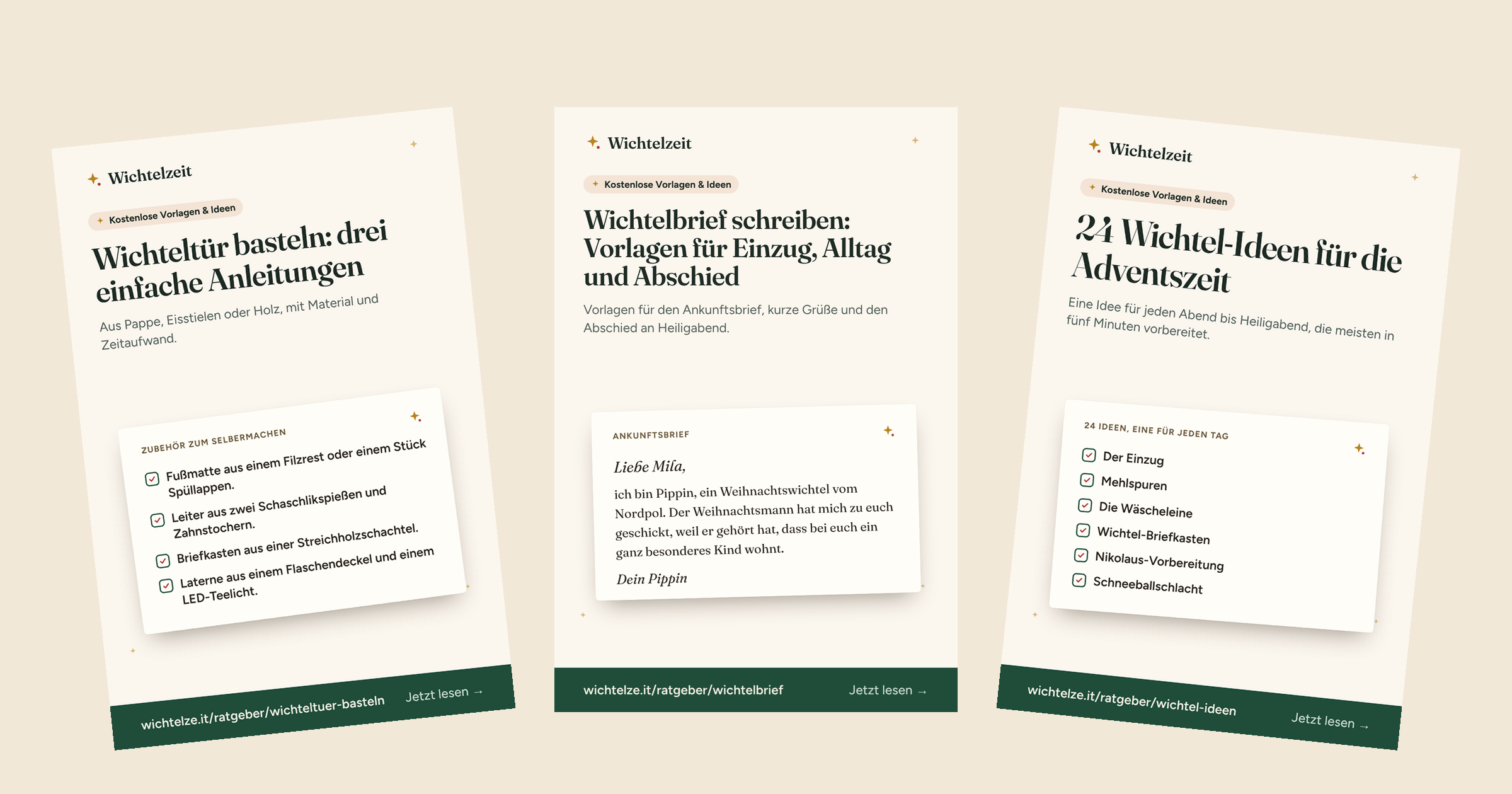
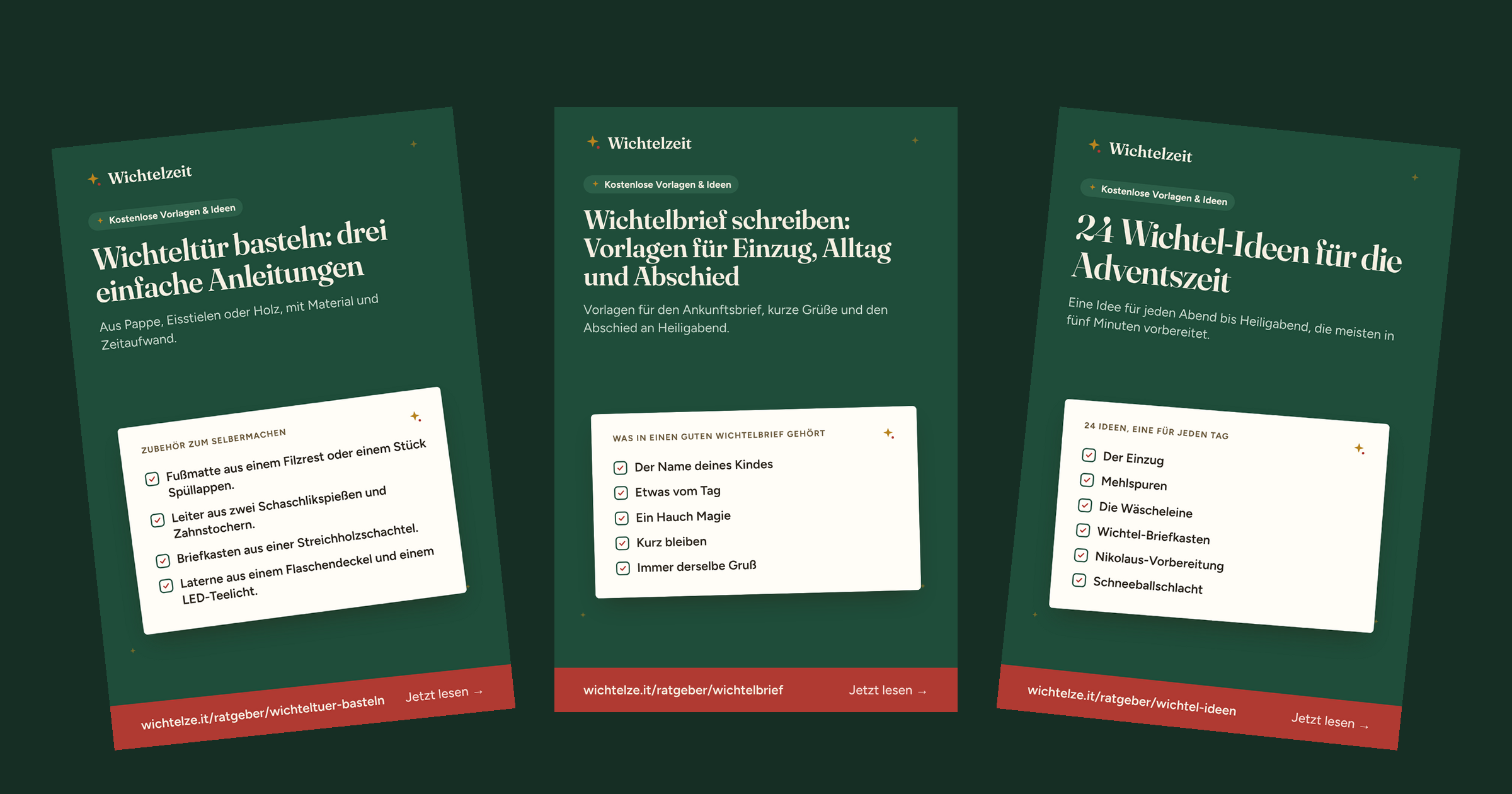
Wichtelzeit already had a small script that renders Open Graph images: HTML templates in the site's own design (cream, forest green, the same fonts), photographed by a local headless Chrome. No extra dependency, no image library. I extended it to render pins as well:
- Two variants per article at 1000×1500: a light one and a green one. Same content, different look, so I can see which style gets more clicks.
- The excerpt on the pin comes from the article itself. If an article contains a letter template, the pin shows the start of that letter. Otherwise it shows the longest list (like "24 ideas, one for each day"). No hand-written copy per pin.
- A test fails if an image is missing. Adding a new article without re-running the script breaks the build, so pins and OG images can't silently fall out of sync.
The core of the rendering is just Chrome's own screenshot flag:
spawnSync(chrome, [
  "--headless",
  "--hide-scrollbars",
  "--force-device-scale-factor=1",
  `--window-size=${width},${height}`,
  `--screenshot=${out}`,
  pathToFileURL(file).href,
]);
Write the HTML to a temp file, point Chrome at it, done. Nine articles times two variants gives 18 pin images in a few seconds. Sixteen of them made it into the schedule.
The pins in the cover image of this post are real output of that script.
What I'm going to measure
I want this test to give a clear answer, so I wrote down the metrics before the first pin went out:
- Visits from Pinterest in Umami (referrers
pinterest.comandpin.it), and which guide pages they land on. - Pinterest's own numbers: impressions, saves and outbound clicks per pin.
- Light vs. green: which variant gets clicked more.
- Google for comparison: clicks and impressions for the same guide pages in Search Console.
- Signups: whether Pinterest visitors join the waitlist for the season start.
The honest baseline as of October 28: the whole Wichtelzeit site had about 140 page views in total so far, and Google sends roughly one click a month. Almost any number from Pinterest will be visible against that.
What's next
The app itself switches from waitlist to live around November 20, ahead of the first Advent Sunday. By then all 16 pins will be out, and I'll write a follow-up here with the real numbers, including the disappointing ones if that's how it goes.
Try Wichtelzeit
If you have kids and a Wichtel moving in this December (or you know parents who do), have a look at Wichtelzeit. It writes the elf's letter for tonight in a few clicks, matched to your child's name and age, and your kids' details are only stored in your browser. Until the season starts you can join the waitlist and get the free Wichtel starter pack (a 24-day plan, four letters and printable elf accessories, in German). The guide is open to everyone already.
If you're building something seasonal too, I'd love to hear which channel worked for you. You can find me on X.